
At first glance, it may seem like a familiar tourist stop, but linger a little longer, and Cat Cat begins to reveal its deeper layers—quiet, enduring, and gently poetic.
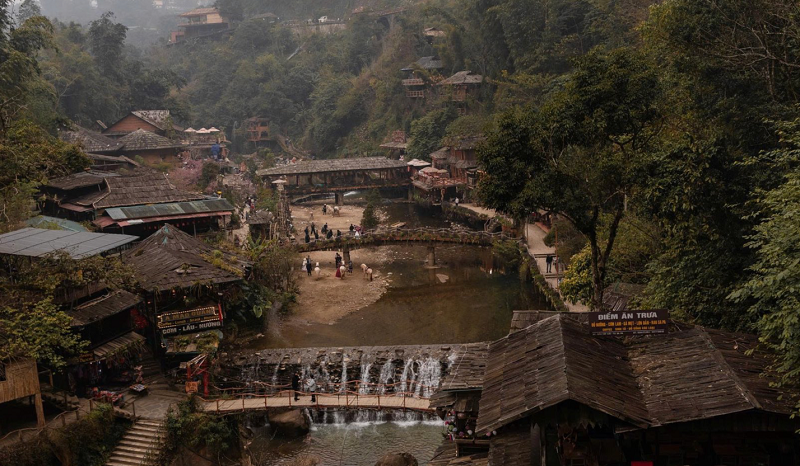
In a lush valley beneath the Hoang Lien Son range, just a short distance from the vibrant town of Sa Pa, Cat Cat Villageunfolds like a living painting—rich in color, rhythm, and stories shaped over generations. At first glance, it may seem like a familiar tourist stop, but linger a little longer, and Cat Cat begins to reveal its deeper layers—quiet, enduring, and gently poetic.
Morning arrives like a whisper. Mist drifts across terraced fields, softening the edges of the world until sky and earth seem to breathe as one. A narrow stone path curves downward, leading you past wooden houses resting against the mountainside, as if they have always belonged there. The air carries the scent of damp earth and woodsmoke, while a stream hums its endless song—ancient, patient, and alive.
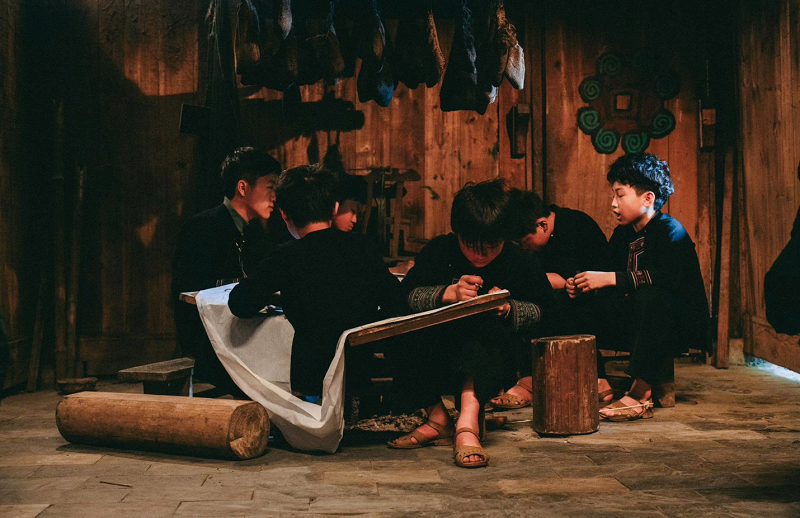
As the village awakens, its colors slowly unfold. Indigo fabrics sway lightly in the breeze, catching fragments of morning light. Inside the homes, women sit by their looms, hands moving with quiet grace, weaving stories into cloth. Each thread holds something unseen—memory, identity, a sense of belonging that cannot be translated, only felt. The deep blues, the delicate patterns—these are not merely colors, but echoes of a culture carried through time.
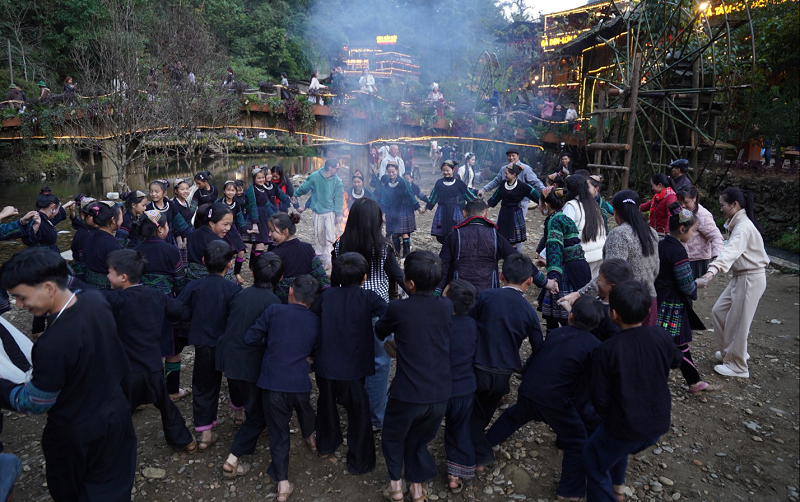
Further along, the rhythm of Cat Cat grows more vivid, yet never hurried. Laughter drifts through the valley like scattered sunlight. The steady clack of weaving blends with the distant sounds of daily life. Then, from somewhere unseen, the khèn begins to play. Its voice rises into the air—at once joyful and aching—like a memory finding its way home. The melody lingers, folding itself into the mountains, into the silence, into you.
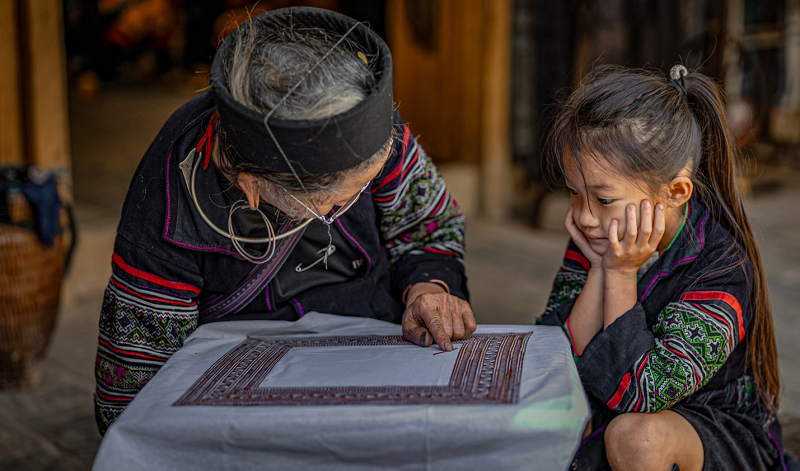
Nothing here feels performed. Life unfolds as it always has—unfiltered, unhurried. The dances are not staged, but lived; the work is not displayed, but necessary; the traditions are not preserved behind glass, but carried in the hands and hearts of the people. In Cat Cat, culture is not something you observe—it is something you quietly step into.
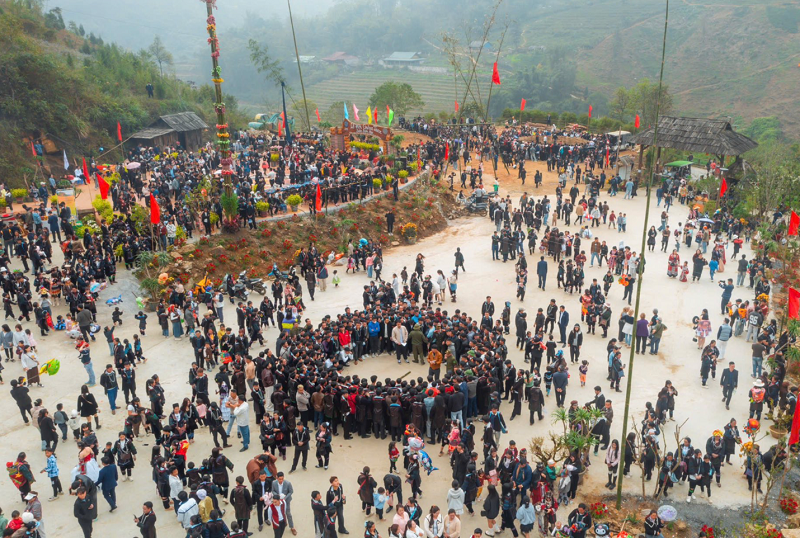
And yet, change moves like a soft current beneath it all. Small cafés open their windows to the valley, and colorful stalls line parts of the path. Visitors arrive, bringing curiosity, admiration, and the gentle weight of modern life. The village stands in a delicate in-between—where past and present meet, not in conflict, but in conversation.
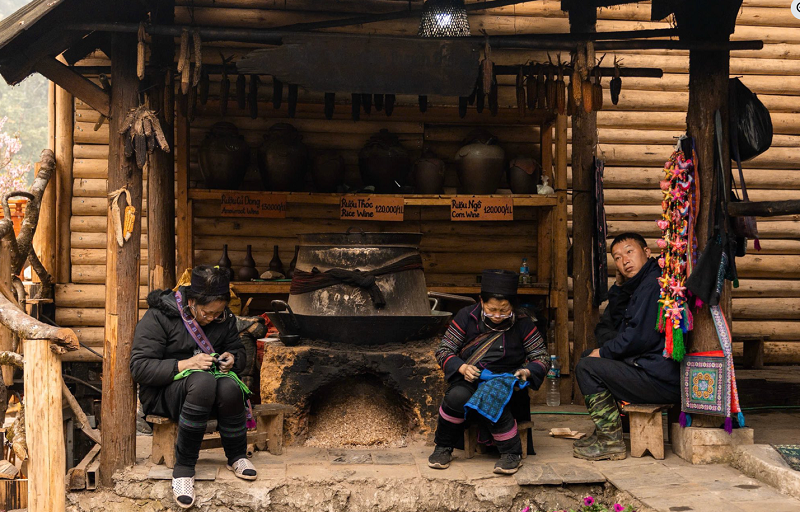
Perhaps this is where the true beauty of Cat Cat lies. Not only in what it has preserved, but in how it continues—adapting, breathing, holding on. There is a quiet resilience here, a grace in the way life bends without breaking.
For those who pass through, the experience deepens when they slow down. When they listen—not just to the sounds, but to the silences. When they see—not only the colors, but the stories within them.
Because Cat Cat is not a place to be rushed. It is a place that reveals itself like a poem—line by line, moment by moment.
And when you finally make your way back to Sa Pa, you may realize something has stayed with you. Not just images, but a feeling—soft as mist, deep as memory. A quiet reminder that in Cat Cat Village, life is not only lived.
Hùng Anh