
Indigo is more than dye; it is memory steeped in leaves, a deep blue echo of land, time, and belonging, closely tied to the cultural identity of ethnic communities such as the H’Mong, for whom textiles are a language of heritage.
In the highland villages scattered along the slopes of the Hoang Lien Son range, within Sa Pa from Ta Van to Giang Ta Chai, drifting through Lao Chai and Hau Thao, and even touching the familiar paths of Cat Cat Village color is not merely seen, but felt, inherited, and quietly lived. Here, indigo is more than dye; it is memory steeped in leaves, a deep blue echo of land, time, and belonging, closely tied to the cultural identity of ethnic communities such as the H’Mong, for whom textiles are a language of heritage.
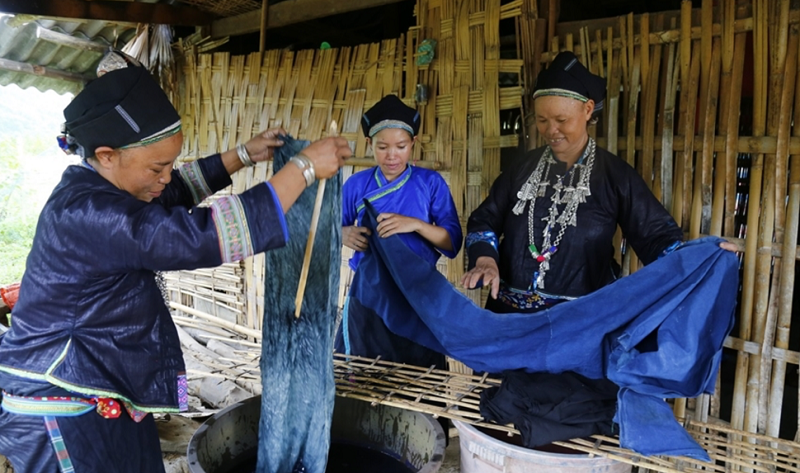
To arrive here is already a quiet transformation. The air grows cooler, softer, carrying the scent of earth and mist. The mountains seem to slow everything down the wind, the footsteps, even your thoughts. And in that stillness, the journey into indigo begins not with fabric, but with leaves gathered from mist-covered slopes, then left to rest in wooden vats. Time moves differently here. The green deepens, transforms, and something unseen begins to emerge, like a story slowly finding its voice.
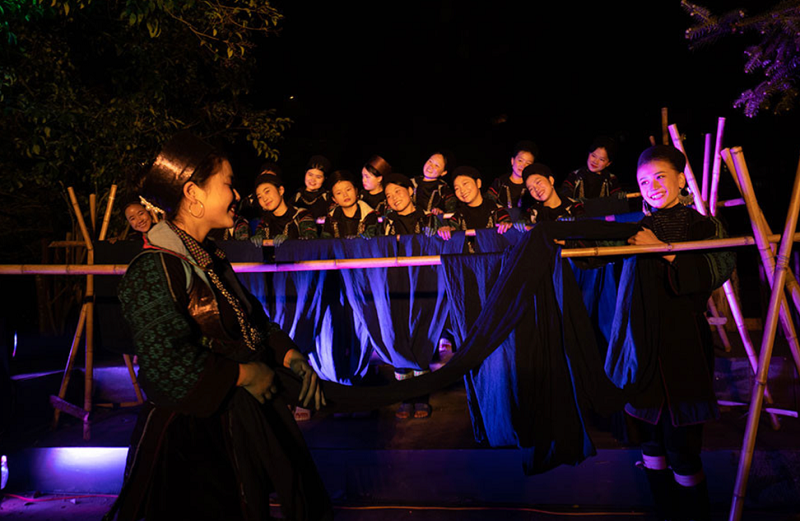
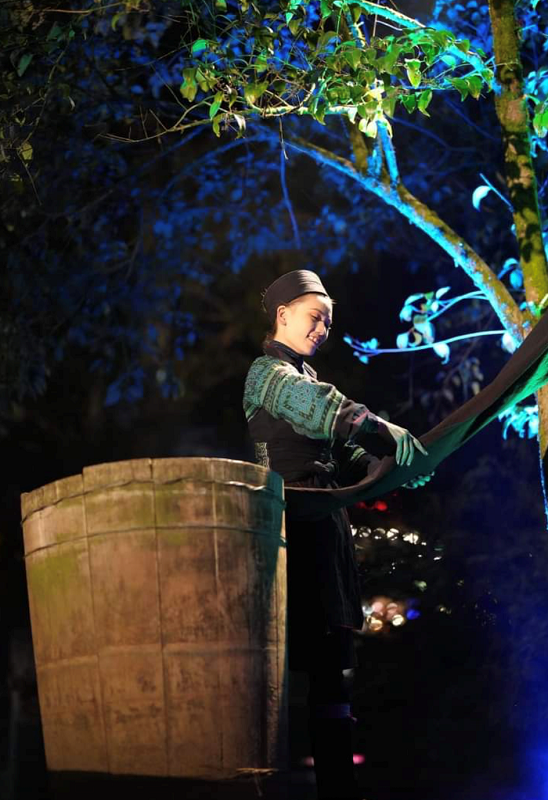
Then, the process gently passes into your hands. A piece of plain cloth—light, open, full of possibility—waits. Under the guidance of local artisans, you fold, twist, and bind it, following movements shaped by generations. There is no urgency, only rhythm. When the cloth is lowered into the indigo vat, it disappears into a deep, quiet blue before rising again—green at first, then slowly deepening as it meets the mountain air. The transformation is soft, patient, almost poetic.
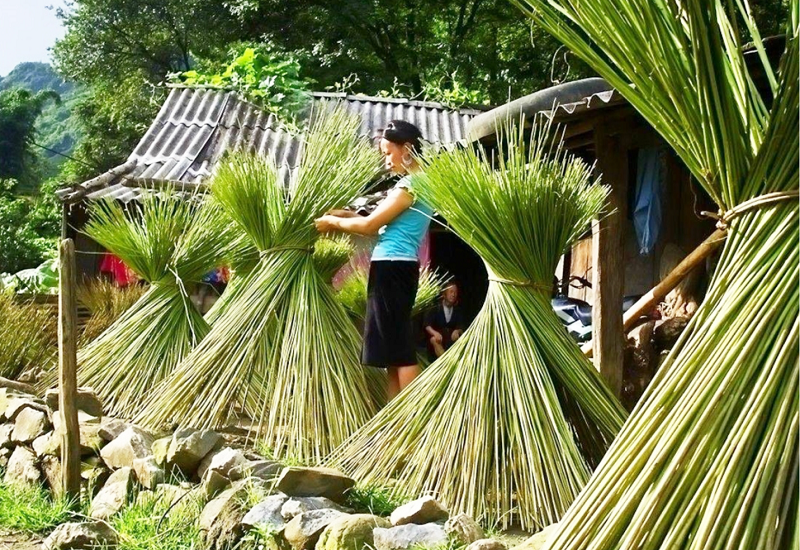
When the cloth is lowered into the indigo vat, the world seems to pause. It disappears beneath the surface of deep blue, held there for a moment that feels longer than it is. And when it rises again, it is not yet complete. A soft green clings to it—fragile, uncertain—until it meets the mountain air. Slowly, patiently, the color deepens. Blue begins to bloom, layer by layer, like twilight settling across the valleys of Hoang Lien.
Around you, life continues in gentle harmony—laughter drifting between wooden houses, stories shared over warm tea, the distant echo of daily work. Indigo here is not just a craft; it is culture. It marks identity, reflects belief, and carries a spiritual connection to nature. Even as change arrives, in villages like Ta Van, Giang Ta Chai, Lao Chai, Hau Thao and Cat Cat Village, this tradition remains—quietly enduring, not unchanged, but unbroken.
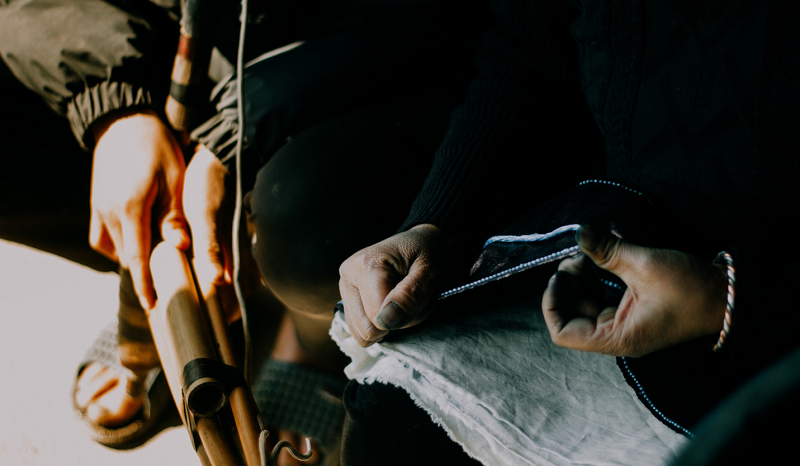
And when the experience comes to an end, you carry more than a piece of dyed fabric. The blue lingers—in the way your hands remember the motion, in the way your mind recalls the stillness, in the way something simple becomes meaningful.
Long after you leaveSa Pa, that color lingers. Soft as mist, deep as memory not just something you made but something that, in a quiet way, became part of you.Top of FormBottom of Form
Bá Hiến
